Electric HDPE Workboat

Teal Marine Technologies Ltd logo
RAD Propulsion logo

5m HDPE Electric Workboat - Naval Architecture & Design for Teal Marine Technologies

BRYD designed this 5-metre electric boat for Teal Marine Technologies, developing a compact working craft around two key elements: HDPE construction and electric propulsion. Built by Teal Marine in West Cork, Ireland, the boat combines a rugged HDPE structure with a 40 kW electric drive from RAD Propulsion, creating a practical platform suited to applications including inshore survey work.

Why HDPE?

High-Density Polyethylene (HDPE) is a thermoplastic increasingly used in small commercial and specialist craft. It does not suffer from saltwater corrosion, is highly resistant to impact and abrasion, needs no antifouling and relatively little maintenance, and can withstand the knocks of demanding day-to-day operation. It can also be recycled at the end of its working life, supporting Teal Marine’s focus on durable and more sustainable marine products.

But choosing HDPE isn’t simply a case of replacing aluminium or GRP with plastic. For BRYD, the project was an interesting naval architecture challenge: designing a complete vessel around a material that behaves very differently from conventional boatbuilding materials.

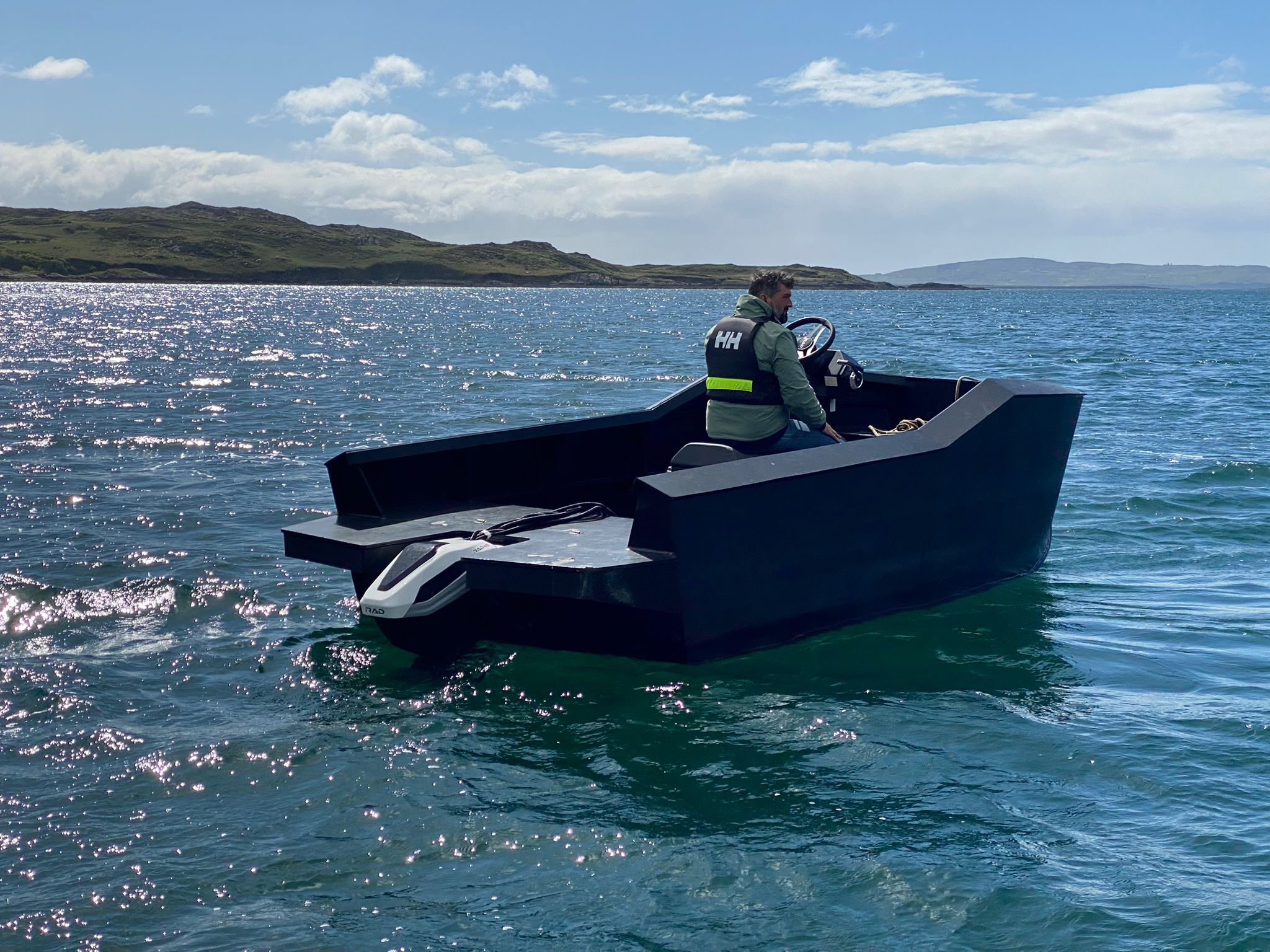
Close-up of the Teal Marine 5m stern and RAD drive

Design Parameters

Key Statistics

Length

Electric Drive

Recyclable Hull Material

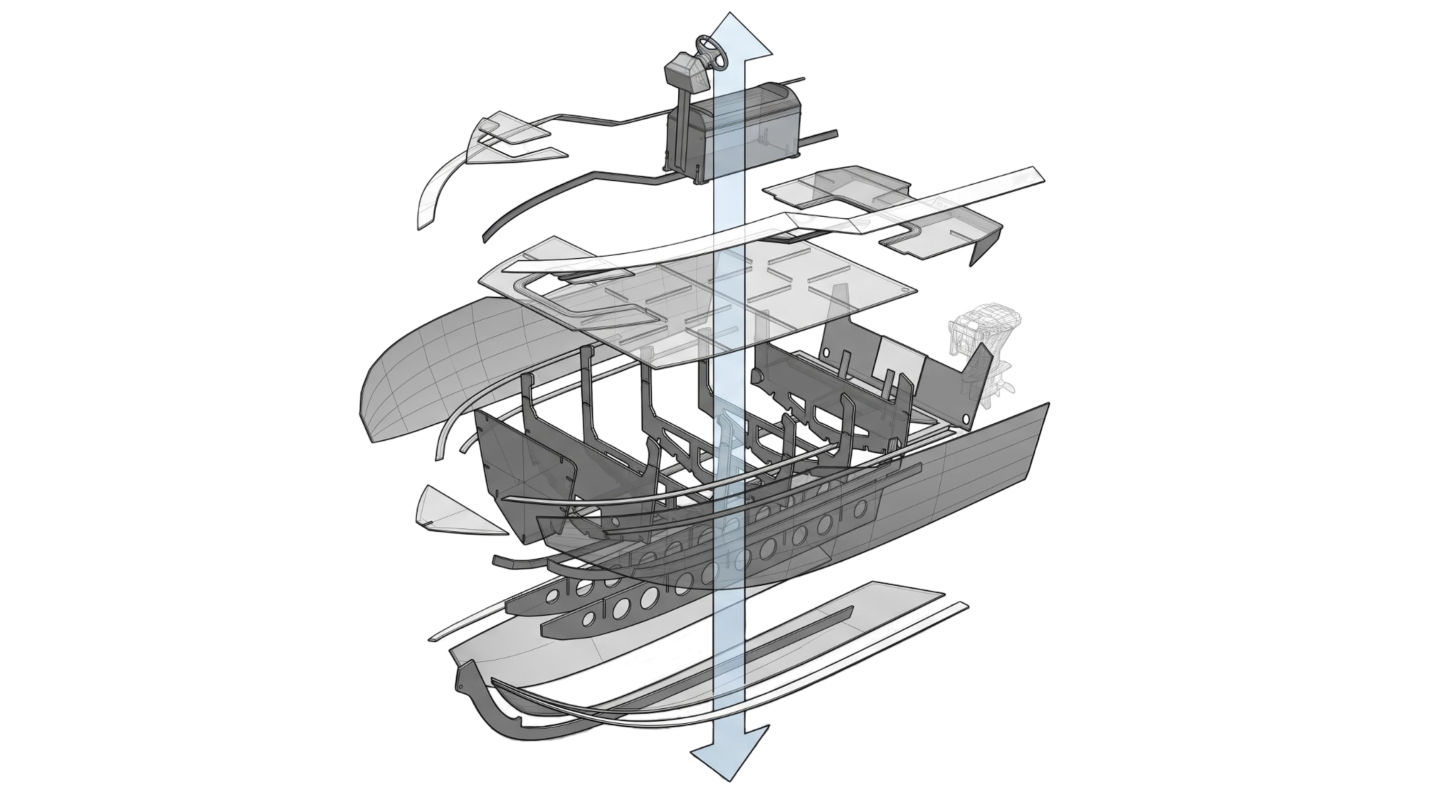
From Flat Plate to Finished Hull

Scroll to see the HDPE structure come together, from individual CNC-cut plates to the assembled hull.

General Statistics

Length5 m
Hull materialHDPE (high-density polyethylene)
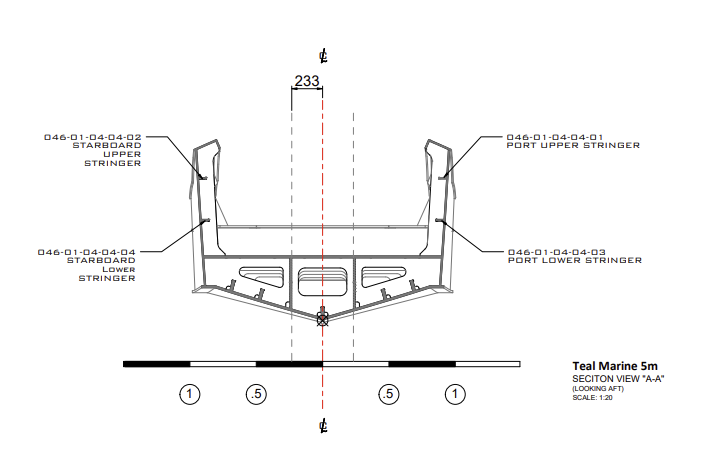
ConstructionCNC-cut, welded HDPE plate
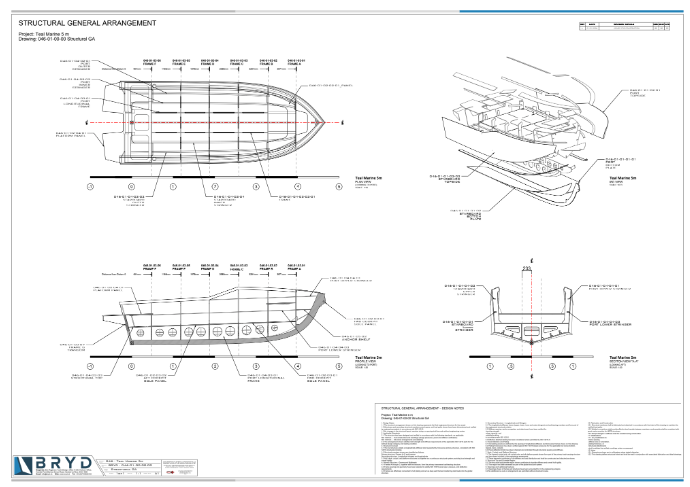
StructurePlates and stringers arranged around HDPE stiffness and thermal behaviour
DesignerBRYD
BuilderTeal Marine Technologies, West Cork, Ireland

General Features

PropulsionRAD Propulsion 40 kW electric drive
ApplicationInshore survey and workboat prototype
CorrosionNone: HDPE does not corrode in saltwater
MaintenanceLow; no antifouling required
DurabilityHigh impact and abrasion resistance
End of lifeRecyclable HDPE

Design & Engineering

Designed Around the Material

Compared with aluminium or GRP, HDPE has relatively low stiffness and is more responsive to changes in temperature. Research into HDPE small-craft construction shows that plate thickness, structural arrangement and stiffener spacing all have a significant effect on how the structure behaves, particularly in areas exposed to solar heating. BRYD therefore designed the hull and structure around HDPE from the outset, rather than adapting a conventional design.

Designed Around the Application

At just five metres, packaging is critical. Hull form, structure, propulsion, batteries, equipment and usable working space all compete within a small platform, so BRYD approached the boat as a complete system, developing the structure and arrangement alongside the electric propulsion installation. The result is a purpose-designed HDPE hull incorporating a RAD Propulsion 40 kW electric drive, well suited to inshore survey work where a compact, robust, electrically powered craft offers an alternative to a conventional small workboat.

From Design to Build

The boat was built by Teal Marine Technologies at its facility in West Cork, using in-house CAD, CNC machining and plastic welding. With HDPE, the way individual panels are arranged, supported, cut and welded is integral to how the finished structure performs, so working with a specialist HDPE builder allowed manufacturing considerations to shape the design rather than being addressed afterwards.

Outcome

The Teal Marine 5m shows why BRYD’s approach to naval architecture starts with understanding the complete vessel. Material, structure, hull form, propulsion, manufacture and operation are interconnected, and taking advantage of HDPE requires a vessel engineered specifically around it.

Designed by BRYD. Built in HDPE by Teal Marine Technologies. Electrically powered by RAD Propulsion.


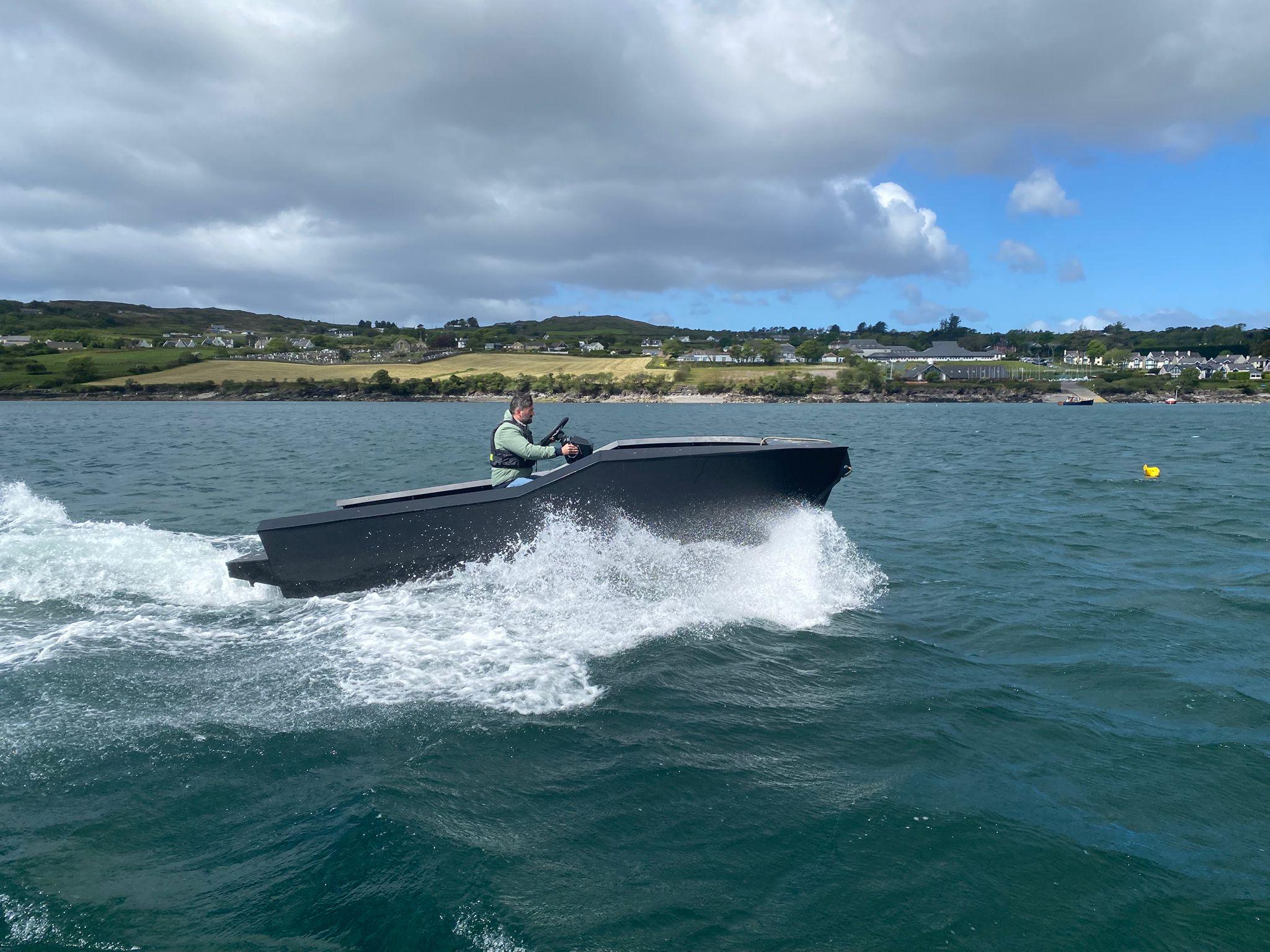
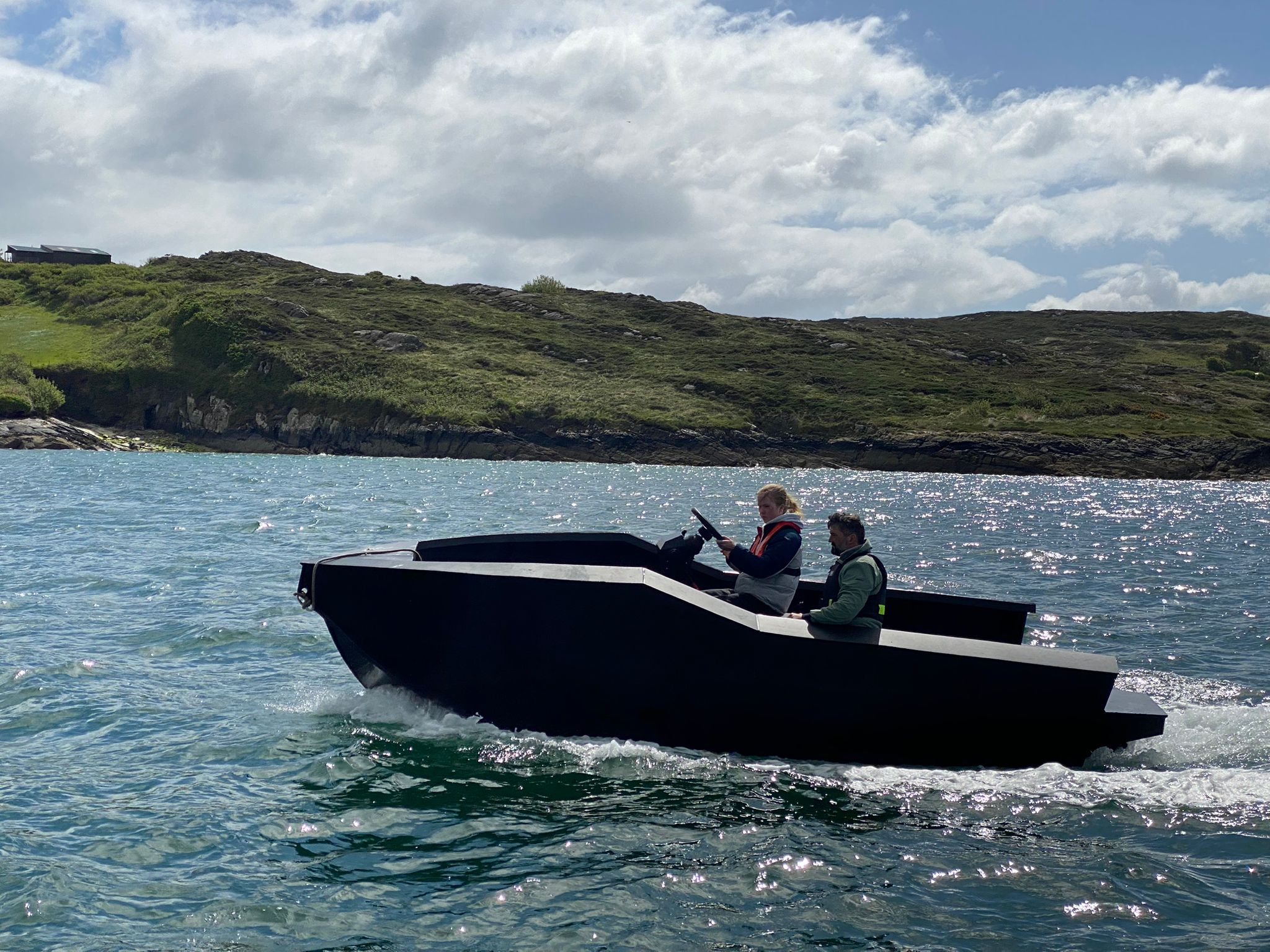
Teal Marine 5m turning with crew aboard